
2018
Neutron instrumentation development —Our group contributes to the Europen Spallation project by designing and delivering neutron optical components for the instruments. The NMX instrument is one ot those instruments where significant Hungarian contribution was delivered. The NMX instrument is a macromolecular single crystal time of flight diffractometer. The instrument has the length of 160m to be able to use the full pulse of ESS (2.76ms). The neutron guide system of the instrument has to transport the "useful" neutrons - reaching the maximum 0.5cm large sample within 0.4o total divergence - with high efficiency. In order to avoid the background caused by the fast neutrons, and to decrease the cost of shielding the beam has to go out of line of sight within 24.5m i.e. before the inner surface of the bunker built to stop the energetic neutrons (up to 2GeV). The original guide design of NMX consisted of a curved part until 24.5m, and a straight one with the cross section of 3X3 cm2. We developed a calculation method for the loss due to the imperfectness of the neutron guide system - waviness and the misalignments of the mirrors. The results show that almost half of the beam will be lost in the original guide. The neutron loss can be avoided by applying the so called ballistic guide i.e. a guide system with diverging - straight - focusing sections. After the curved section the divergence of the neutron beam is decreased with a diverging segment, then a long, ~100m straight guide with larger (4.5X4.5 cm2) cross section results more than two times less reflection in the guide, finally a parabolic focusing section focuses the beam onto the small sample. Since the curvature of the guide is horizontal, vertically the diverging section is already at the beginning of the guide system. To decrease the effect of the inhomogeneity and position dependent divergence caused by the simple curved guide, the horizontal diverging part is asymmetric, the the outer side (convex side in the curved region) of the guide after the curved section is diverging while the inner part goes parallel with the main beam in the first 3.5m and then starts to diverge. With these modifications the transmission of the guide increased over 85%.
Beside the NMX instrument we took part in the design of two other instruments at ESS: the BIFROST instrument is an indirect geometry inelastic spectrometer optimized for extreme environment (high fields, low temperature, high pressure etc.) where the vertical divergence of the scattered neutrons is limited by the sample environment. We took part in the optimization of the chopper and analyser system of the instrument. The MIRACLES instrument is also an indirect geometry inelastic spectrometer, a so called time of flight backscattering spectrometer for investigation of slow changes like diffusion, low energy excitations etc. We took part in the design of the radial collimator system (around the sample) which reduces the background of the measurement.
Members of the group actively contributed to the fulfillment of the EU-H2020 BrightnESS project, including the development of a 2D position sensitive neutron detector with solid boron converter and the main components (bench, choppers, mask with pinhole) of the ESS Test Beam Line, dedicated to energy sensitive imaging of the cold neutron moderator. The chopper of the instrument is shown in Fig. 1. This equipment is expected to be the first instrument to receive neutrons and experimentally assess the performance of the low dimensional moderator, initially proposed by Ferenc Mezei and implemented for the first time at ESS. A prototype of the equipment has been applied to map the energy-dependent brightness of the cold moderator at the Budapest Research Reactor as well as at the JEEP II reactor of IFE at Kjeller, Norway.
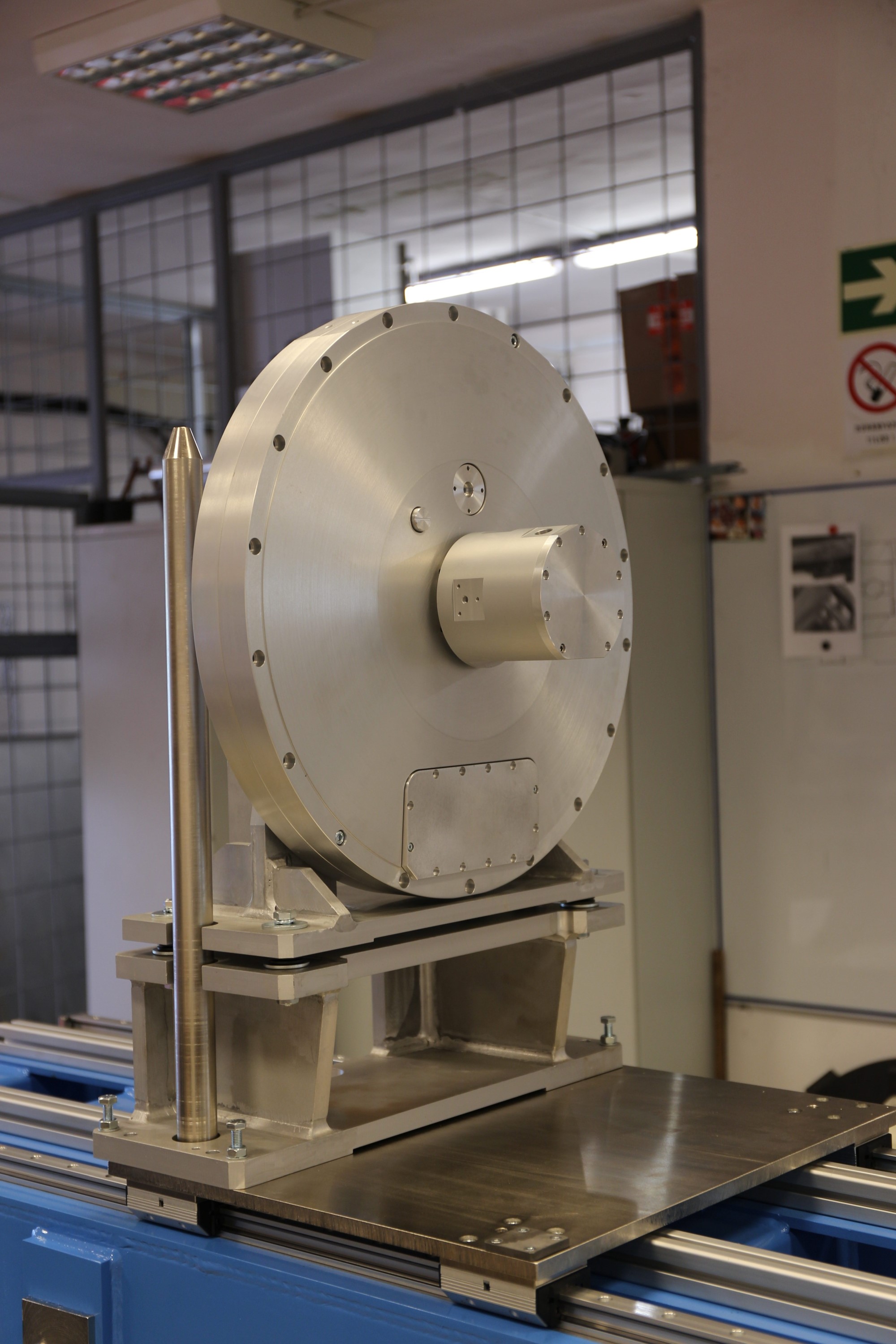
Figure 1. The chopper and positioning sytem of the ESS Test Beam Line.
Our group was part of the organizers and lecturers of the 12th Central European Training School on Neutron Techniques (CETS2018), which provided insight into neutron scattering and imaging techniques and their application for studies on structure and dynamics of condensed matter. An important mission of the school is to illustrate the multifarious neutron research potential towards higher education, academy and industry.
2017
Neutron instrumentation development. — Members of the group actively participated in the detailed design work of two instruments for the European Spallation Source (ESS) in Lund, Sweden: BIFROST indirect neutron spectrometer and NMX macromolecular single-crystal diffractometer. Both are new type instruments, the first ones in their class. The final design of the neutron optics systems of the instruments (neutron guide systems, choppers and detectors) are finalized by means of analytical calculations completed at our department. Researchers of the Neutron Spectroscopy Department investigated the robustness of the neutron guide system against misalignment and waviness of the neutron mirrors and the movement of the floor, features indispensable both in the optimization of the guide system and in the design of radiological shielding.
In the frame of the EU-H2020 BrightnESS project, researchers of the group have performed the optimal principial design of the ESS Test Beamline, the first equipment to receive neutrons and produce results at the ESS facility currently being built at Lund.
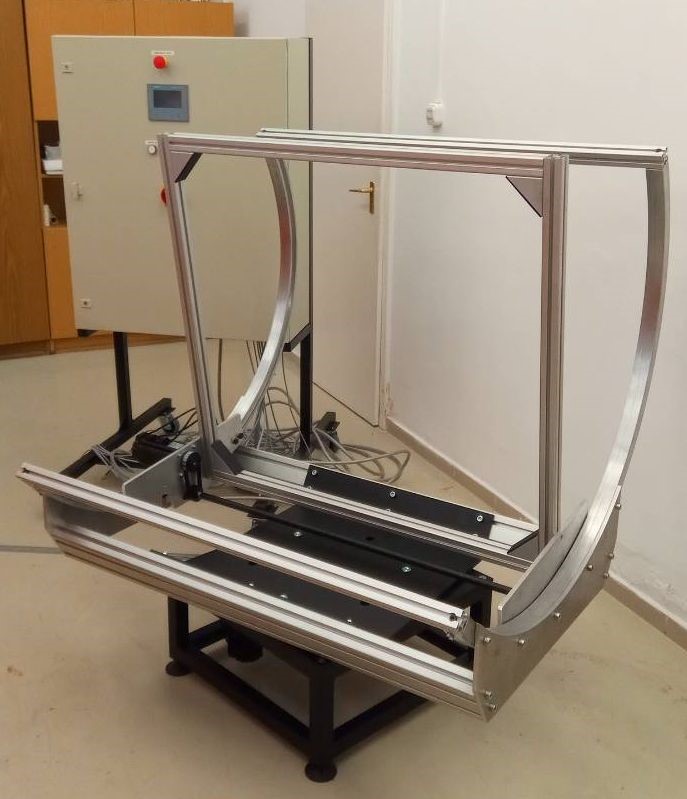
Figure 1. TOF large sample positioning system
We have developed, successfully tested at the Budapest Research Reactor and applied during an experiment series at the JEEPII reactor of IFE Kjeller, Norway a compact, mobile equipment for energy-sensitive imaging of neutron sources. The key components are the mask with pinhole and chopper unit as well as a four-layer, double-readout solid boron converter neutron detector. Neutron adsorber materials, system geometry and parameters have been optimized to accommodate the high count rate and good resolution specific for the intended application.
A further development is the equipment for positioning large samples at the time-of-flight (TOF) diffractometer (Fig. 1), a sample environment equipment indispensable for fulfillment of archeometry tasks in the frame of the EU-H2020 Iperion project.
We coordinated the instrumental part of the Hungarian In-Kind contribution to the ESS, including design and production of neutron optical elements and shielding as well as engineer and physicist secondment provisions.
Neutron holography. — In 2017, we continued the research started earlier on the topic of magnetic holography. Neutrons possess magnetic moment, thus they interact with the magnetic moments of the atoms in the sample. The latest investigations revealed the possibility to use this interaction to measure the local magnetic structure around selected atoms in the sample. We described the magnetic hologram previously and showed that the radial component of the atomic magnetic moments can be obtained by applying the Helmholtz-Kirchoff integral transformation to holograms measured in a special experimental arrangement. In 2017, we found a correlation method which can be used to determine the three components of the magnetization vectors. The optimal experimental parameters (neutron spin direction, neutron wavelength and required statistics) were obtained by model calculations (Fig. 2).
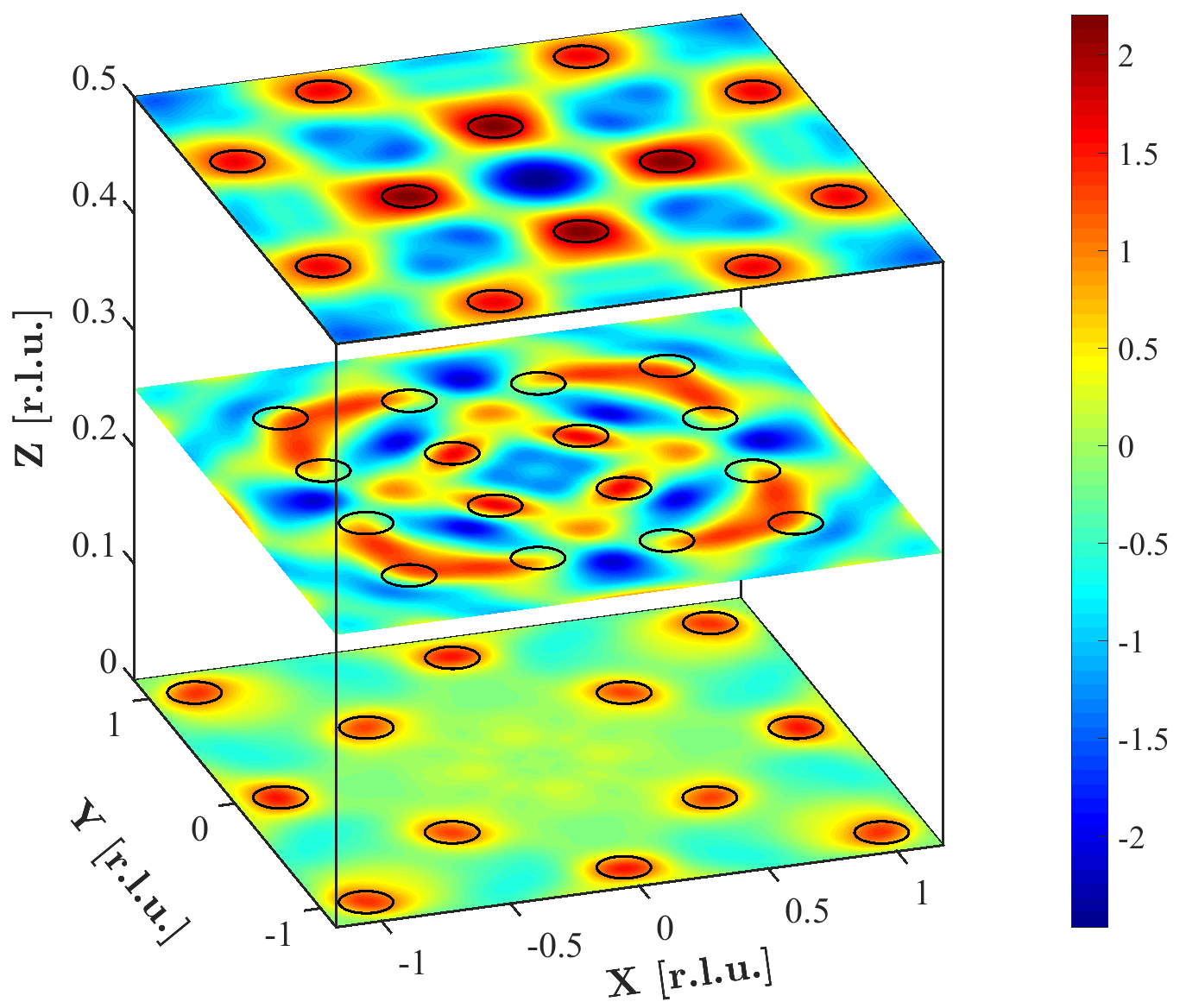
Figure 2.. The z-component of the magnetic moments of Cu atoms in CuCr2O4, obtained by applying the proposed correlation method on the simulated magnetic hologram
Structural investigation of hybrid silica gels. — The similarities and the differences on the physicochemical characteristics of the organic–inorganic hybrid silica gels derived from two-vinyl substituted (Vinyl – triacetoxy / - triethoxy silica (VTAS/VTES)) precursors were studied. NaF and NH4F catalysts were applied to promote the gelification. For both silica precursors the use of NH4F catalysts resulted in higher specific surface area. Using VTES, higher degree of vinyl substitution could be obtained, but the silica gel specific surface areas are lower compared to the corresponding samples obtained with VTAS. The increasing quantity of the vinyl substituents causes a decrease in primary particle size, pore number and sizes, but an increasing hydrophobicity no matter if VTAS of VTES were used. Further investigation will be made to determine how structural modification of the silica hybrid silica support will influence the activity of immobilized guest molecules (porphyrins, drug or enzymes).
An international symposium was organized dedicated to the memory of our passed colleague, László Cser, in the frame of the yearly meeting of the International Scientific Advisory Committee of the Budapest Research Centre. Co-workers, friends, colleagues, former and actual PhD students held lectures to honor his life-long scientific activity.