 Magyar
HUN-REN Wigner Research Centre for Physics


Nagy Dénes Lajos
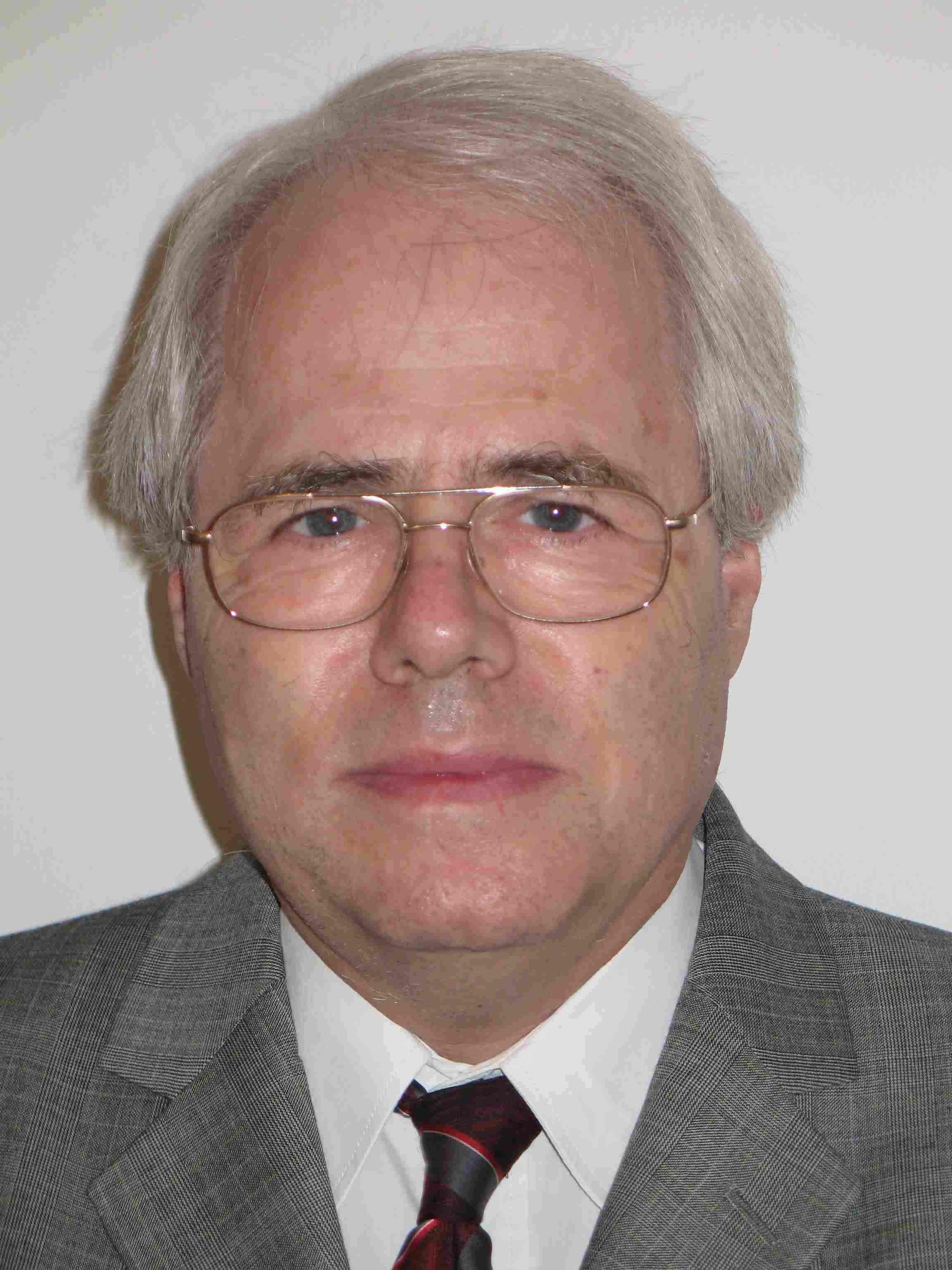
- E-mail: nagy.denes@wigner.hu
- Phone: +36 1 392 2517
- Fax: +36 1 395 9151
Dénes Lajos Nagy is a physicist, graduated in 1967. Since then, he has been working as a Mössbauer spectroscopist at the KFKI Research Institute for Particle and Nuclear Physics (until 1991 its predecessor, the Central Research Institute for Physics), Budapest. Since 1998, he is also full professor at the Institute of Physics, Department of Atomic Physics of the Eötvös Loránd University, Budapest. Since the mid-seventies, D.L. Nagy has gradually expanded his field of activity from Mössbauer spectroscopy to other fields of nuclear solid-state physics and magnetism. Presently, his main scientific interest is the application of laboratory Mössbauer spectroscopy and nuclear resonant scattering of synchrotron radiation to the determination of magnetic layer and domain structure of multilayers and modelling of formation and transformation of domain patterns in those systems. In addition, D.L. Nagy is actively taking part in shaping research infrastructure policy in various national and international bodies.
CV
EDUCATION AND DEGREES
1962–1967 Student of physics, Eötvös Loránd University, Budapest
1967 Diploma in Physics, Eötvös Loránd University, Budapest
1973 Dr. rer. nat., Eötvös Loránd University, Budapest
1980 CSc (Candidate of the physical science), Hungarian Academy of Sciences, Budapest
1988 DSc (Doctor of the physical science), Hungarian Academy of Sciences, Budapest
1996 Dr. habil., Eötvös Loránd University, Budapest
PROFESSIONAL EXPERIENCE, POSITIONS, AWARDS
1967 Research associate ® scientific counsellor of the KFKI Research Institute for Particle and Nuclear Physics of the Hungarian Academy of Sciences (part of the former Central Research Institute for Physics, KFKI)
1973–1974 DAAD-scholarship in the Institute of Physics of the University of Erlangen–Nürnberg (15 months)
1977 Demonstrator in the Institute of Physics of the University of Erlangen–Nürnberg (3 months)
1979–1988 Head, Department of Nuclear Physics of KFKI Budapest
1981–1983 Research associate in the Institute of Physics of the University of Erlangen–Nürnberg (2 years)
1985 Gyulai-Prize of the Roland Eötvös Physical Society, Budapest
1988–1990 Deputy Director of the KFKI Research Institute for Particle and Nuclear Physics, Budapest
1990–1991 DFG Guest Professor in the Institute of Physics of the University of Erlangen–Nürnberg (1 year)
1991 Guest Professor of the Haraeus Foundation in the Institute of Nuclear Physics of the Technical University Darmstadt (3 months)
1995– Head, Department of Nuclear Physics of the KFKI Research Institute for Particle and Nuclear Physics, Budapest
1995–1998 Scientific counsellor at the Department of Atomic Physics of the Eötvös Loránd University, Budapest
1998–2001 Széchenyi Professor Fellowship
1998 Full Professor at the Department of Atomic Physics of the Eötvös Loránd University, Budapest
ROLE IN SCIENTIFIC COMMUNITY
1979– KFKI Research Institute for Particle and Nuclear Physics, Scientific Council, Member
1981 International Conference on Amorphous Systems Investigated by Nuclear Methods, Balatodfüred, Hungary, 31 August – 4 September 1981, Organising Committee, Vice Chair
1989 International Conference on the Applications of the Mössbauer Effect, Budapest, Hungary, 4–8 September 1989, Organising Committee, Chair
1994–2008 Hungarian Academy of Sciences, Committee of Solid State Physics, Member
1995–1996 European Physical Society, East-West Task Force, Member
1995–1997 Hungarian Synchrotron Committee, Member
1996–1999 Roland Eötvös Physical Society, Secretary General
1996–2003 European Physical Society, East-West Task Force, Secretary
1996–2006 Roland Eötvös Physical Society, European Physical Society Council Representative
1996–2006 International Board of the Applications of the Mössbauer Effect, Member
1997– MATFUND Hungarian High School Mathematics and Physics Foundation, Board of Trustees, Vice Chair
1998–2007 Mössbauer Effect Reference and Data Journal, International Advisory Board, Member
1998–2002 Federation of Technical and Scientific Societies (Hungary), Vice President
1998– Hungarian Synchrotron Committee, Chair
1999–2002 EPS-12: General Conference of the European Physical Society, Budapest, Hungary, 26–30 August 2002: International Organising Committee, Chair, International Programme Committee, Secretary
1999–2003 Roland Eötvös Physical Society, Vice President
2000–2008 Program Advisory Committee for Condensed Matter Physics, Joint Institute for Nuclear Research, Dubna, Member
2000–2003 KFKI Condensed Matter Research Center, Work Package Nuclear Nanophysics, Head
2001–2003 KFKI Condensed Matter Research Center, Scientific Council, Secretary
2001–2004 Review Committee, European Synchrotron Radiation Facility, Grenoble, Member
2001– Common Coordination Committee of the Hungarian Academy of Sciences and the Joint Institute for Nuclear Research, Dubna, HAS Representative
2001–2008 Hungarian Academy of Sciences, Council of Academic Research Institutes, Board of Trustees for Mathematics and Natural Sciences, Member
2002– Joint Institute for Nuclear Research, Dubna, Scientific Council, Member
2002– Common Coordination Committee of the Hungarian Academy of Sciences and the Joint Institute for Nuclear Research, Dubna, Team Leader in Neutron Physics
2003–2006 European Physical Society, Action Committee on Conferences, Chair
2004– European Strategic Forum for Research Infrastructures, Physical Sciences and Engineering Roadmap Working Group, Member
2005 Roland Eötvös Physical Society, Liaison for the World Year of Physics
2005– European XFEL, International Steering Committee, Member
2005– Budapest Research Reactor, International Scientific Advisory Committee, Member
2007– FP7 Research Infrastructures Programme Committee, expert
2007– International Board of the Applications of the Mössbauer Effect, Chair
2008– European Synchrotron Radiation Facility, Consortium CENTRALSYNC, Steering Committee, Member
2008– Hungarian Academy of Sciences, Research Infrastructures Committee, Member
2008– Hungarian Ion-beam Physics Platform, Steering Committee, Member
2008– Hungarian Research Infrastructures Survey and Roadmap Project (NEKIFUT), Physical Sciences and Engineering Working Group, Chair
2008– Hyperfine Interactions, Editorial Board, Member
MEMBERSHIPS
1964– Roland Eötvös Physical Society
1980– European Physical Society (Individual Member)
TEACHING
University lectures, seminars
1969– Tutor of diploma and PhD students (Budapest and Erlangen)
1979–1980 Special course “Resonance spectroscopy” (Eötvös Loránd University Budapest)
1981–1983 Tutor in the undergraduate and graduate laboratories (University Erlangen-Nürnberg)
1990–1991 Special course “Nuclear solid state physics” (University Erlangen-Nürnberg)
1991 Special course “Nuclear solid state physics” (Technical University Darmstadt)
1992– Tutor in the undergraduate and graduate laboratories (Eötvös Loránd University Budapest)
1996– Seminar “Nuclear Methods in structure analysis” (Eötvös Loránd University Budapest)
1996– Tutor in the graduate laboratory (Technical University Budapest)
1997–1998 Special course “Condensed matter spectroscopy” (Eötvös Loránd University Budapest)
1998– Special course “Nuclear solid state physics” (Eötvös Loránd University Budapest)
1999–2001 Special course “Thin film magnetism” (Eötvös Loránd University Budapest and Technical University Budapest)
2001–2004 Lectures and tutorials in the ERASMUS Intensive Programme “Thin Films as Seen by Local Probes”
2005–2007 Lectures and tutorials in the ERASMUS Intensive Programme “Ion-beam, photon and hyperfine methods in nano-structured materials”
2008– Lectures and tutorials in the ERASMUS Intensive Programme “Engineering and characterisation of nanostructures by photon, ion-beam and nuclear methods”
Research
- Texture effects in Mössbauer spectroscopy
- Magnetic phase transitions in oxide, nitride and carbide phases
- Magnetic relaxation in Fe3+ and Fe2+ compounds
- Ligand fields and hyperfine interaction in crystalline and amorphous Fe2+ compounds (Mössbauer studies at low temperatures in external magnetic fields)
- After effects of the electron capture in isolators and semiconductors
- Mössbauer studies of high-Tc superconductors
- Mössbauer studies of molecular magnets
- Development and application of the grazing incident nuclear resonant scattering of synchrotron radiation (“Synchrotron Mössbauer Reflectometry”, SMR) and the application of polarised neutron reflectometry (PNR) for thin film magnetism, depth-selective magnetic phase analysis and the development of nuclear resonant monochromators
- Development and application of Mössbauer polarimetry with laboratory sources and with synchrotron radiation
 Materials Science by Nuclear Methods