 English
HUN-REN Wigner Fizikai Kutatóközpont


Kótai Endre
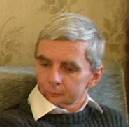
- E-mail: kotai.endre@wigner.hu
- Phone: +36 1 392 2222 ext.: 1506
- Fax: +36 1 392 2518
Recent work of E. Kótai includes nuclear analysis using MeV energy ion beams (RBS - Rutherford Backscattering Spectrometry, ERDA - Elastic Recoil Detection Analysis, NRA - Nuclear Reaction Analysis, channeling).
He developed a computer code (RBX) for data analysis and spectrum simulation in Rutherford backscattering spectrometry. RBX is only code, which can evaluate and simulate channeling spectra using analytical formulas.
He has been extensively dealing with ion implantation and with fundamental processes of ion implantation in porous silicon, metals and semiconductors.
CV
EDUCATION, DEGREES AND POSITIONS
1974 MSc. in Physics, Eötvös Loránd University, Budapest, Hungary
1974-1981 research fellow, HIKI Industrial Research Institute for Electronics
1982- senior research fellow, MTA KFKI Research Institute for Particle and Nuclear Physics
1984 Prize of Hungarian Academy of Science
1993 Selényi Pál prize, Roland Eötvös Physcial Society
1995 Candidate of Physics, Hungarian Academy of Sciences
ROLE IN SCIENTIFIC COMMUNITY
1974 Roland Eötvös Physical Society, member
1990- Böhmische Physical Society, member
Research
Some of the most frequently used methods in depth profiling of different elements in solids are based on Ion Beam Analysis (IBA) using ions of a few MeV energy. In these methods, for example Rutherford Backscattering Spectrometry - RBS, Elastic Recoil Detection Analysis - ERDA and Nuclear Reaction Analysis - NRA the element to be analyzed is identified by the energy and type of the emitted particles coming from a specific reaction between the incident ion and the given target element. Although these methods are well established, many problems still arise when new applications are considered.
The subject of my activities may be divided in two categories:
- In the field of IBA methodology:
- Detection of light impurity in heavy substrate is one of the main problems of Rutherford backscattering spectroscopy. We developed a new method for O detection, based on the O16 (α,α) O16 elastic resonance. The sensitivity of O detection is increased by a factor of 10.
- Using glancing incidence, the detection limit increased an additional factor of 3.5, and the depth resolution has been improved by a factor of 5.
- Elastic recoil detection (ERDA) is a fast, nondestructive method for depth profiling of hydrogen isotopes. We joined to the development of ERDA. We measured the cross-section of the H1 (He4, He4 H1 elastic recoil reaction and developed a method to select the measuring parameters for optimal depth resolution.
- The ion beam channeling method is used in the study of impurity distributions and implantation damage in crystalline materials. I developed a new method for measuring the stopping power of channel ions using resonance backscattering method. This method does not require any special target preparation.
- I developed a computer code (RBX) for data analysis and spectrum simulation in Rutherford backscattering spectrometry. RBX is only code, which can evaluate and simulate channeling spectra using analytical formulas. The program has been used in 17 laboratories in the world.
In the field of solid state physics and material science:
 Nukleáris Anyagtudományi Osztály