 English
Fejlesztés előrejelző szkennelő alagút mikroszkópia és spektroszkópia szimulációs módszerek új anyagokhoz
Projekt
Projekt címe
Fejlesztés előrejelző szkennelő alagút mikroszkópia és spektroszkópia szimulációs módszerek új anyagokhoz
Projekt azonosító
152473
Finanszírozó
Nemzeti Kutatási, Fejlesztési és Innovációs Hivatal
Funding scheme
National Research Excellence Program ADVANCED Grant
Támogatás összege
120 millió Ft
Összefoglaló
Scanning tunneling microscopy/spectroscopy (STM/STS) is an extremely useful scanning probe method to obtain information on the local electronic properties of a wide spectrum of material surfaces down to sub-atomic scales, and STM/STS contributed considerably to the revolution in nanoscience and -technology. Recent experimental progress requires the improvement and acceleration of STM/STS simulations in order to explain all relevant details of experimental findings on novel materials, and predictive methods and functionalities in STM/STS based on simple information are sought for a long time.
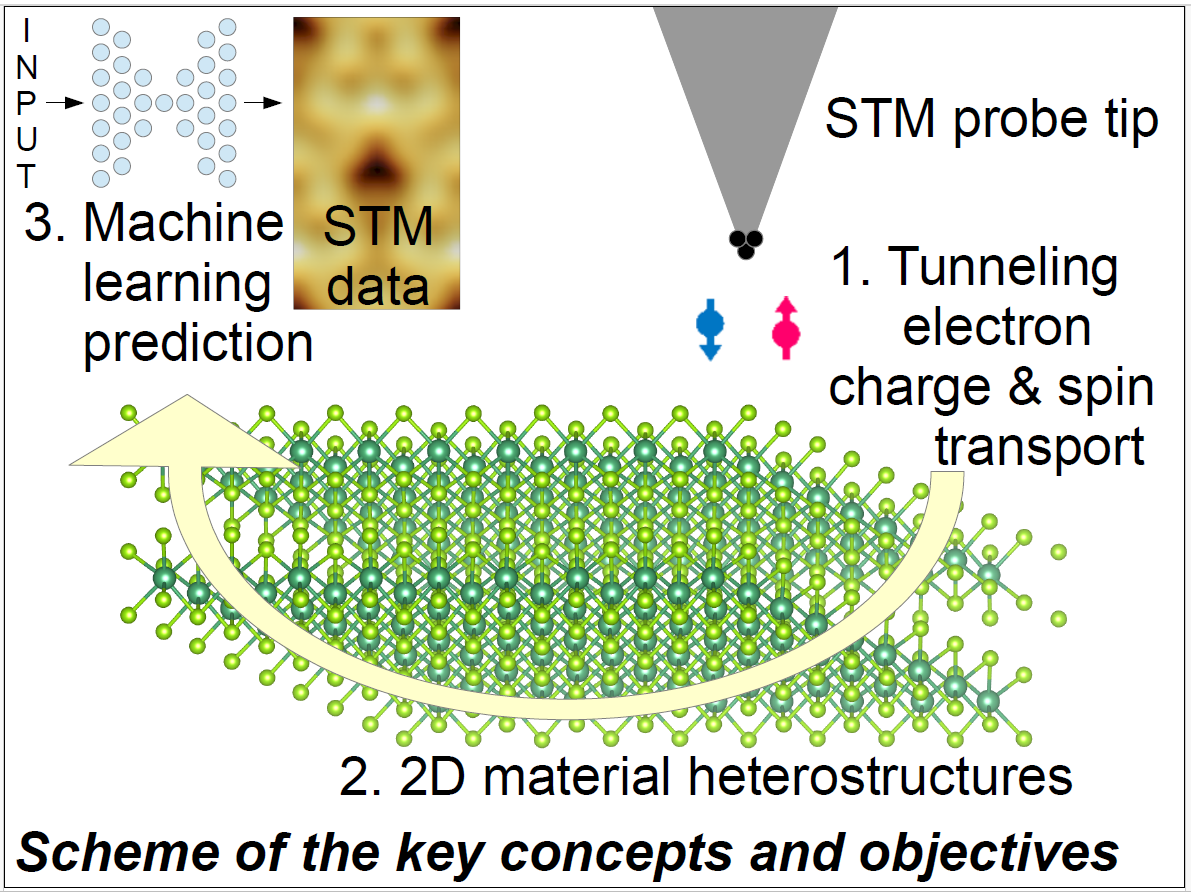
Our proposed research connects to the worldwide efforts of creating knowledge on the understanding of physical and chemical properties of novel materials and their surfaces/interfaces by improving theoretical, computational and simulation methods for the future exploitation of this knowledge in the development of new technologies in the sectors of information & energy transport and storage, nano-biomedicine, space industry, etc, for the benefit of the whole society in the long term.
The present project proposes the development of advanced high-resolution STM/STS simulation tools significantly going beyond the state of the art with 3 major goals: (1) improve the theoretical description of tunneling spin transport by implementing a combination of magnetoresistance (MR) effects of different physical origins into a common framework, and by implementing the calculation of energy-resolved tunneling vector spin transport quantities, (2) enable the treatment of generally incommensurate 2D material Moiré heterostructures by including electronic structure information of the sample surface and the probe tip into a geometric model, and (3) implement and demonstrate machine learning (ML) protocols for achieving predictive STM/STS for the purpose of solving related surface science problems in connection to spintronics and twistronics. The ultimate goal is to predict and physically interpret new transferable STM/STS simulation methods by employing ML methods based on truly multi-dimensional simulated STM/STS data sets, thus going beyond the state-of-the-art 2D image processing.
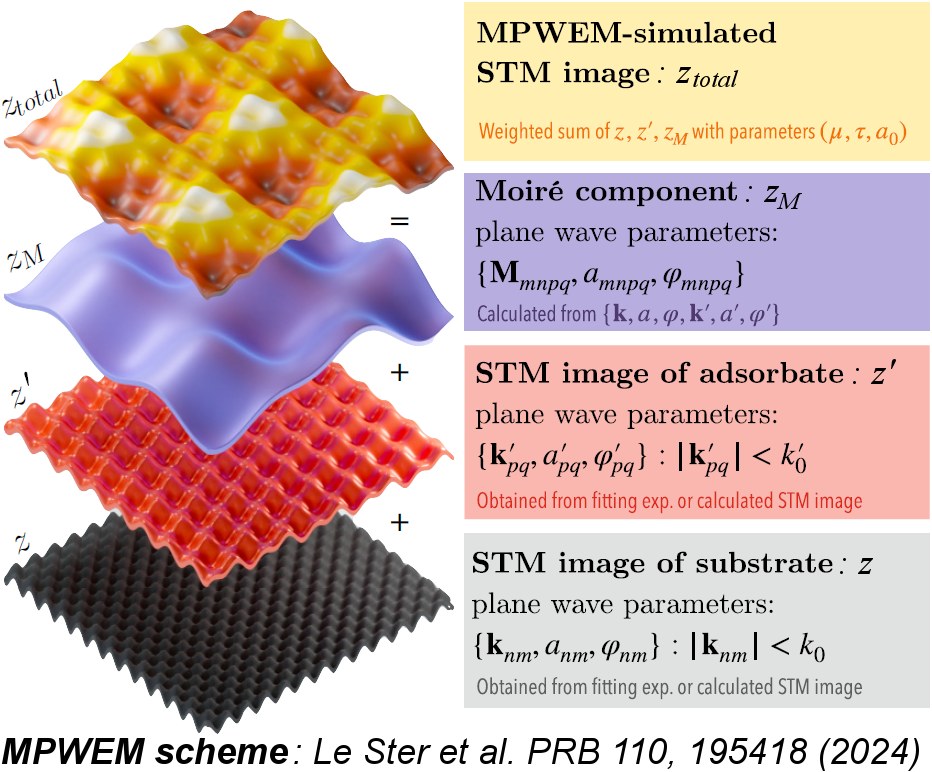
The project’s expected results are mainly innovative and efficient new theoretical methods implemented into computer simulation tools and workflows concerning STM/STS. The newly developed methods and ML protocols will be used to tackle scientific problems and increase the knowledge base of spintronics and twistronics taking novel material surfaces by generating and analyzing a large amount of multi-dimensional STM/STS data during the project’s lifetime. Going beyond that, our new methods will certainly be used for the STM/STS investigation of a wide range of material surfaces, and our generated STM/STS data in the spirit of the FAIR principles will be made openly available, which will be invaluable for future data mining and ML applications. Accelerating materials research based on our results will pave the way for technological advancements using novel materials, thus it has the long-term potential for creating economical & environmental impact for the benefit of the whole society, going much beyond the significant impact on the specialized scientific community. Moreover, our innovative idea of predicting methods by ML can also be transferred to other scientific disciplines.
The proposed ambitious research is based on the existing and to-be-developed expertise of the PI and his group in STM/STS theory developments, simulations and ML applications, and involves international cooperation with leading theoretical and experimental research groups. Creation and transfer of knowledge are considered as key results, which will be realized by the performed research, by training students and young researchers, by communicating with the scientific community, the general public and other stakeholders, and through international cooperations. The realization of this project will strengthen Hungary’s position in computational materials science. The project’s lifetime is 2026-2029 (4 years).
 PREDSTM Projekt