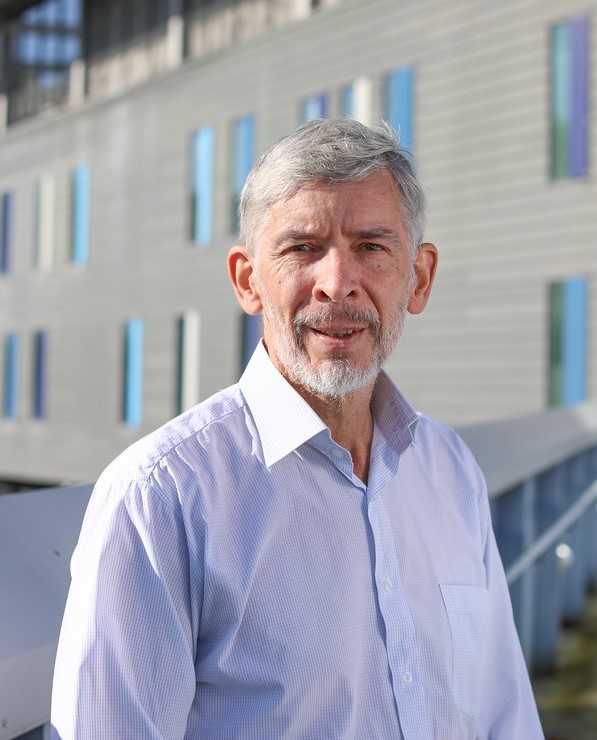

Robert McGreevy (STFC Rutherford Appleton Laboratory) will give a talk entitled "Neutron scattering in Europe: from BEP0 to ESS" at the Wigner Colloquium on Tuesday, 8 December, at 2 p.m.
Place: KFKI Campus, Bldg. 1, Conference room, and also on Zoom
Abstract:
The European Spallation Source (ESS), which is the most recent major neutron research facility, was first proposed in 1991 and is now due to come into operation in 2027. When neutron scattering first started in Europe in the early 1950’s, at the BEP0 reactor, the timescales to propose, design, construct and bring into operation were much shorter! This presentation will tell the story of neutron scattering in Europe from BEP0, through the ‘game-changing’ developments at the Institut Laue Langevin reactor in France and the ISIS accelerator based source in the UK, to the current status of ESS and the prospects for the future.
CV of the speaker
Robert graduated and received his PhD from Oxford University (UK) and was a Royal Society research fellow and lecturer there until 1992. From 1992-2002 he was director of the Studsvik Neutron Research Laboratory at Uppsala University (Sweden). He was appointed Professor of Neutron Scattering Physics in 2001. From 2002-2011 he was Division Head at the ISIS facility at the STFC Rutherford Appleton Laboratory (UK). From 2011-2012 he was Deputy Director for Neutron Sciences at Oak Ridge National Laboratory (USA). In 2012 he returned to ISIS and was Director there until 2021. From 2021-23 he worked part time as a consultant for STFC, responsible for UK in-kind contributions to the European Spallation Source (ESS) project and helping to establish the Ada Lovelace Centre, providing data and software capabilities for STFC national facilities. Since 2024 he has been chair of ESS Council.
Robert is author of over 180 research papers in the fields of neutron scattering and computer modelling. He specialised in studies of the structures (including magnetic structures) of all types of disordered materials, from high temperature superconductors to liquid metal alloys. He has a special interest in the development and integration of data analysis and data management tools with experiment. He is the developer of the reverse Monte Carlo (RMC) method of structural modelling; over 2000 papers have been published using this technique.
Robert has been particularly active in the promotion of European and international scientific collaboration. He was coordinator of EU projects between 1990 and 2010, including the Integrated Infrastructure Initiative for Neutron Scattering and Muon Spectroscopy (NMI3) and the I3-Network. He was a previous chair of the League of advanced European Neutron Sources (LENS).