

2020
Short title of the following text. — Conformal field theories are one of the pillars of modern quantum physics, suited for describing critical quantum many-body systems. In our recent paper [1], we discussed how aspects of conformal field theory (CFT) can be captured in terms of simple toy models of tensor networks. Specifically, we introduced the concept of a quasi-regular conformal field theory (qCFT) defined from a discretely broken subset of conformal symmetries. We realized these symmetries on the level of boundary states of a tensor network on a regular hyperbolic tiling, extending geometrical insights from the anti-de Sitter/conformal field theory (AdS/CFT) correspondence to the discrete setting.
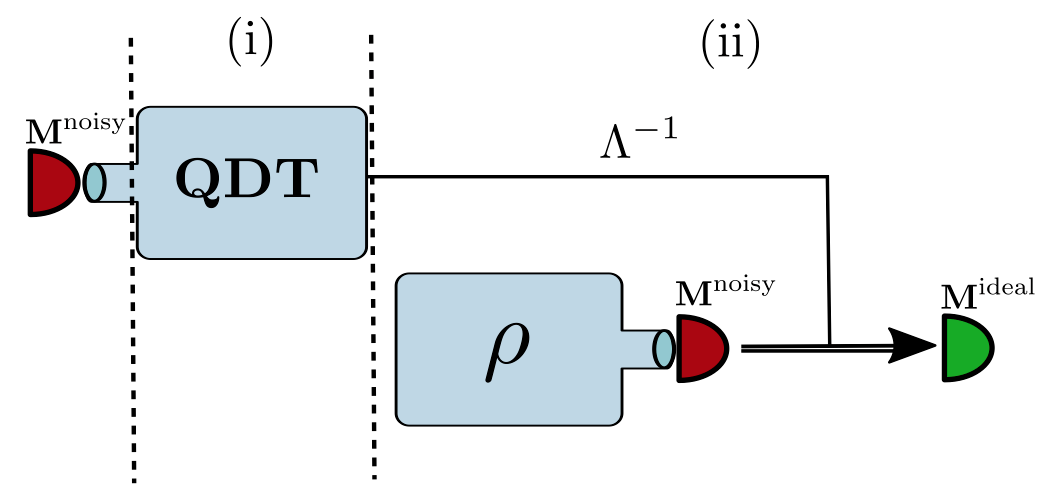
Figure 1. AdS embeddings of tensor networks. The multi-scale entanglement renormalization ansatz (MERA) corresponds to a light-cone embedding (a), while regular discretizations such as the Majorana dimer network with {5,4}-tiling, corresponding to the hyperbolic pentagon code, can be identified with a time slice (b). The Majorana dimer states with {5,4}-tiling at the first (c) and the second inflation (d) layers are shown on the Poincaré disk.
Central to the AdS/CFT correspondence is a precise relationship between the curvature of an AdS spacetime and the central charge of the dual conformal on its boundary. Our work shows that such a relationship can also be established for tensor network models of AdS/CFT based on regular bulk geometries, leading to an analytical form of the maximal central charges exhibited by the boundary states. We explicitly identified a class of tensors based on Majorana dimer states, depicted in Fig. 1., that saturate these bounds in the large curvature limit, while also realizing perfect and block-perfect holographic quantum error correcting codes. These systems exhibit a large range of fractional central charges, tunable by the choice of bulk tiling. Our approach thus provides a precise physical interpretation of tensor network models on regular hyperbolic geometries and establishes quantitative connections to a wide range of existing models.
Mitigation of readout noise in near-term quantum processors. — We proposed a simple scheme to reduce readout errors in experiments on quantum systems with finite number of measurement outcomes. Our method, described in Ref. [2], relies on performing classical post-processing which is preceded by Quantum Detector Tomography, i.e., the reconstruction of a Positive-Operator Valued Measure (POVM) describing the given quantum measurement device. If the measurement device is affected only by an invertible classical noise, it is possible to correct the outcome statistics of future experiments performed on the same device, as illustrated schematically in Fig. 2.
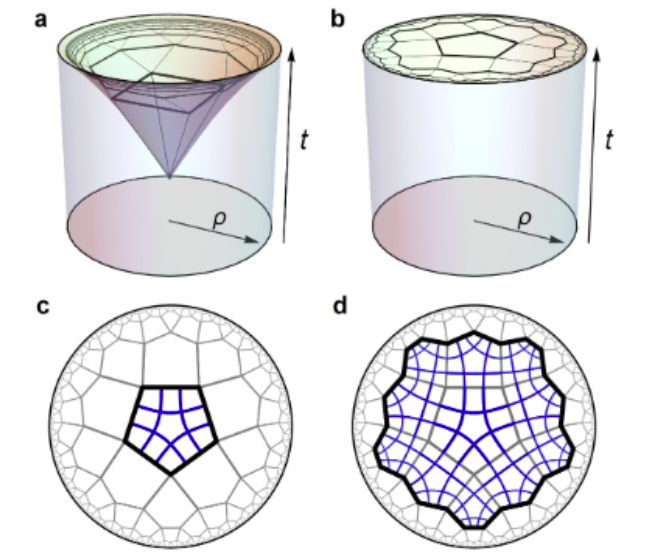
Figure 2. Schematic representation of our readout error mitigation procedure. (i) In the first stage, one performs the tomography of a noisy detector (red semicircle). (ii) In the next stage, when measuring an arbitrary quantum state ρ, one employs a post-processing procedure on the measured statistics through the application of the inverse of a stochastic noise map obtained in the quantum detector tomography. This gives access to the statistics that would have been obtained in an ideal detector (green semicircle).
To support the practical applicability of this scheme for near-term quantum devices, we characterize measurements implemented in IBM's and Rigetti's quantum processors. We find that for these devices, based on superconducting transmon qubits, classical noise is indeed the dominant source of readout errors. Moreover, we analyze the influence of the presence of coherent errors and finite statistics on the performance of our error-mitigation procedure. Applying our scheme on the IBM's 5-qubit device, we observe a significant improvement of the results of a number of single- and two-qubit tasks including Quantum State Tomography (QST), Quantum Process Tomography (QPT), the implementation of non-projective measurements, and certain quantum algorithms (Grover's search and the Bernstein-Vazirani algorithm).